Irrigation
Water transfer for drip, sprinkler or storage-fed irrigation, designed around crop demand, irrigated area, scheduling and the pressure required by the distribution system.

Plasma Solar designs and installs solar water-pumping systems for irrigation, livestock, boreholes, water storage and commercial water supply. Each system is sized around the water required, the pumping head, the pump and the available solar resource.
For solar water pumping in Kenya, a pump cannot be selected from motor power alone. The same pump produces different water volumes at different heads, while pipe length, pipe diameter, elevation, borehole drawdown and irrigation pressure all change the duty the system must meet.
We begin by establishing how many cubic metres of water are needed per day, where the water comes from, where it must go and within what operating window. We then match the pump, solar array and pump inverter to that duty.
Where practical, water is pumped during daylight into a storage tank. Stored water becomes the system’s buffer, often avoiding the cost and maintenance of batteries.
Water transfer for drip, sprinkler or storage-fed irrigation, designed around crop demand, irrigated area, scheduling and the pressure required by the distribution system.
Submersible pumping from boreholes to ground or elevated storage, accounting for static water level, drawdown, borehole yield and discharge elevation.
Daytime pumping to tanks, troughs or reservoirs for ranches and farms where grid extension or regular diesel operation is costly.
Pumping between rivers, dams, tanks and reservoirs where the route, vertical rise and pipe friction determine the actual system duty.
Water pumping for schools, hospitals, compounds and community facilities, with storage sized around daily consumption and service continuity.
Solar-assisted pumping for water businesses, processing facilities and other operations that can shift a meaningful share of pumping into daylight hours.
| Information | Why it matters | Useful site data |
|---|---|---|
| Daily water demand | Sets the volume that must be delivered during the available pumping window. | Litres or cubic metres required per day, including seasonal peaks. |
| Water source | Boreholes, rivers, dams and tanks have different level and pump requirements. | Source type, static level, drawdown and tested borehole yield where applicable. |
| Total dynamic head | The pump must overcome vertical lift, pressure requirements and friction losses. | Elevation difference, pipe route, pipe diameter, length and fittings. |
| Existing pump | A usable pump may be retained if its electrical and hydraulic characteristics suit solar operation. | Nameplate photograph, pump curve, motor rating, voltage and current. |
| Storage | Storage allows water pumped in sunshine to be used later without batteries. | Tank capacity, elevation, current consumption pattern and desired autonomy. |
| Irrigation method | Drip and sprinkler systems have different flow and pressure requirements. | Irrigated acreage, zones, emitter or sprinkler data and operating schedule. |
| Installation area | The solar array needs secure, unshaded space and a suitable mounting arrangement. | Site photographs, coordinates and available ground, roof or tower space. |
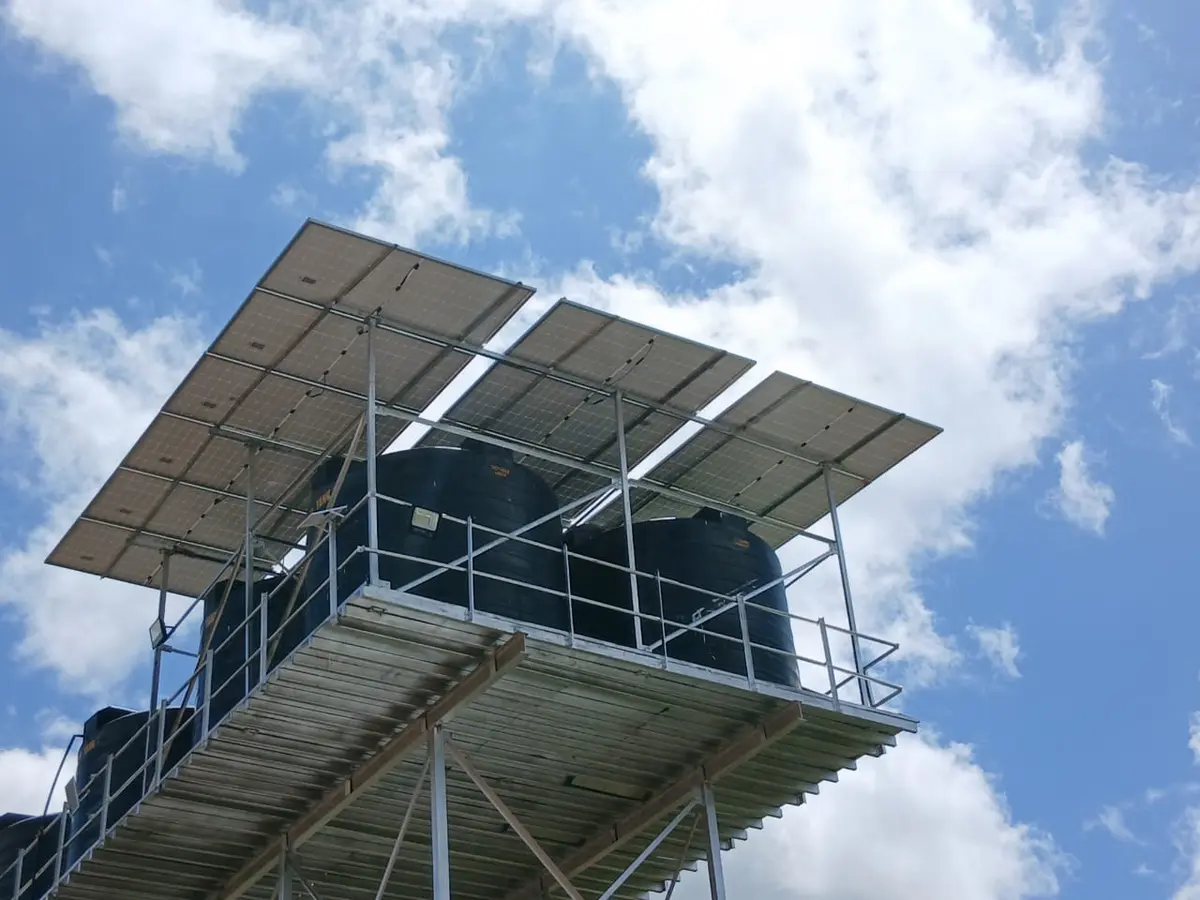
This installation uses solar energy to support water pumping into elevated storage tanks for irrigation. The arrangement makes productive use of daytime sunshine while stored water remains available when irrigation is scheduled.
The project illustrates an important design principle: instead of storing electricity in batteries, many agricultural systems can store the pumped water itself. The best arrangement still depends on daily demand, storage capacity, pump duty and how irrigation is divided into zones.
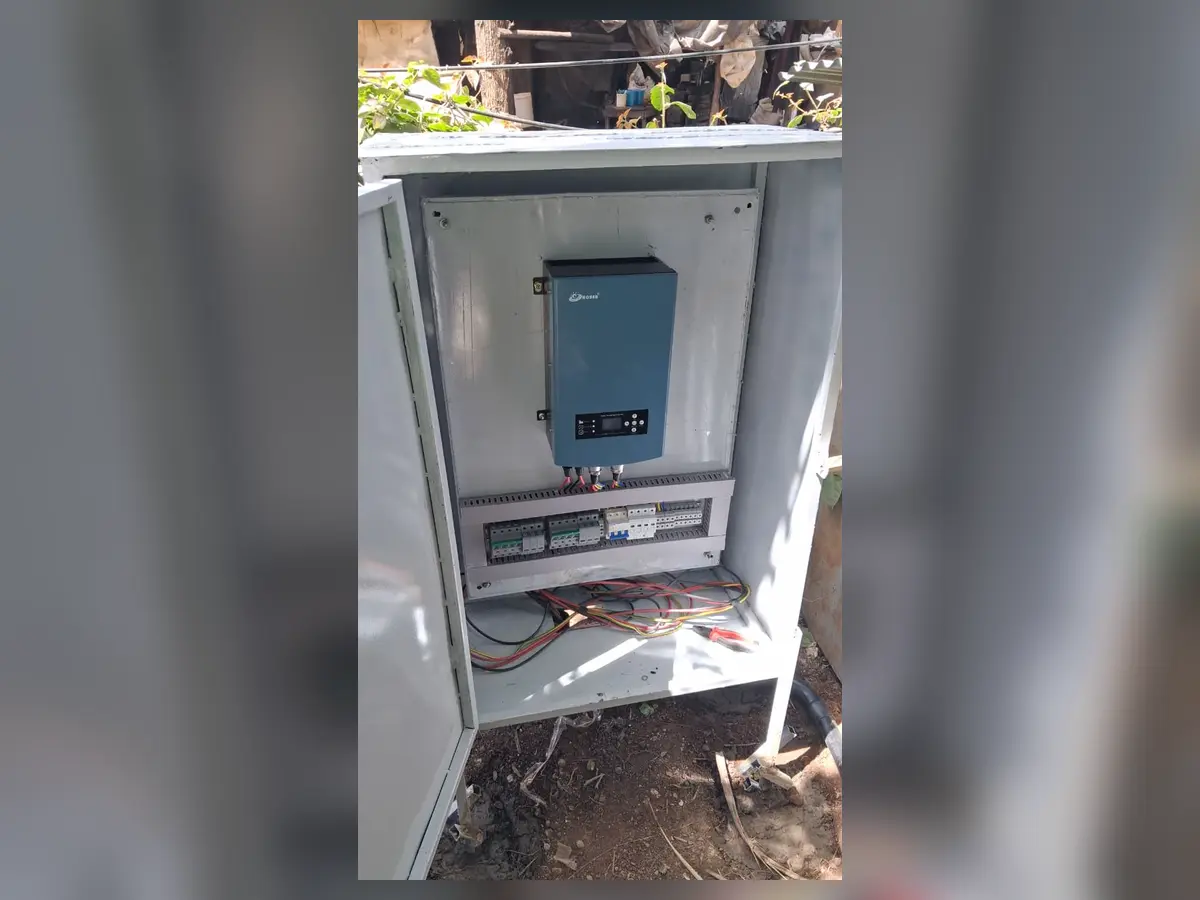
A solar pump inverter converts power from the PV array into controlled power for the pump motor. It helps the pump operate as solar conditions change and can provide functions such as soft starting, dry-run protection and level-control integration when correctly selected and configured.
Plasma Solar commonly works with Hober, INVT and VEICHI pump inverters. Brand selection is made together with motor compatibility, array voltage, pump power, required controls, operating environment, availability and project budget.
Dedicated solar pump-drive options used across agricultural and borehole pumping projects.
Pump-control options considered according to motor, voltage, system duty and control requirements.
Solar pumping drives selected where the model and electrical characteristics match the proposed design.
We establish daily volume, source, discharge point, elevation, pipe route, storage and irrigation or supply schedule.
We verify site conditions and determine the design flow, total dynamic head, pump duty and solar-array requirement.
We match the pump, inverter, PV array, mounting, protection, cables, controls and sensors to the calculated duty.
We install, configure and test the system, confirm control functions and hand over operating guidance to the client.
Possibly. We first check the pump and motor nameplate, voltage, power, starting characteristics, pump curve and required duty. The pump must also be compatible with a suitable solar pump inverter and PV-array voltage range.
Many systems do not. Water can be pumped during sunny hours into a correctly sized tank or reservoir for later use. Batteries may be considered where the operating requirement cannot be met through daylight pumping and water storage, but they add cost and maintenance.
Output normally varies with available solar power. A correctly designed system considers the site’s solar resource, required daily volume and storage. Some projects may also use grid or generator support where continuity requirements justify it.
The answer depends on motor rating, inverter input range, pumping head, required flow, daily water volume and operating conditions. Pump power alone is not enough to determine an accurate array size.
Yes, if the pump and distribution system are designed to provide the required flow and pressure. Irrigation zones, pipe sizes, filters, emitters, sprinklers and elevation must be considered together.
The design may include DC and AC isolation and protection, earthing, surge protection, dry-run protection, tank-level control and suitable enclosure protection. The exact arrangement depends on the equipment and site.
Send the site location, daily water requirement, source and destination, borehole report if available, existing pump nameplate, pipe length and diameter, elevation information, tank size, irrigation details and clear site photographs.
Share your borehole report or water-source details, pump nameplate, daily demand, pipe route, storage and irrigation requirements. Plasma Solar will identify the next useful step—whether that is a preliminary system selection, technical survey or complete proposal.