
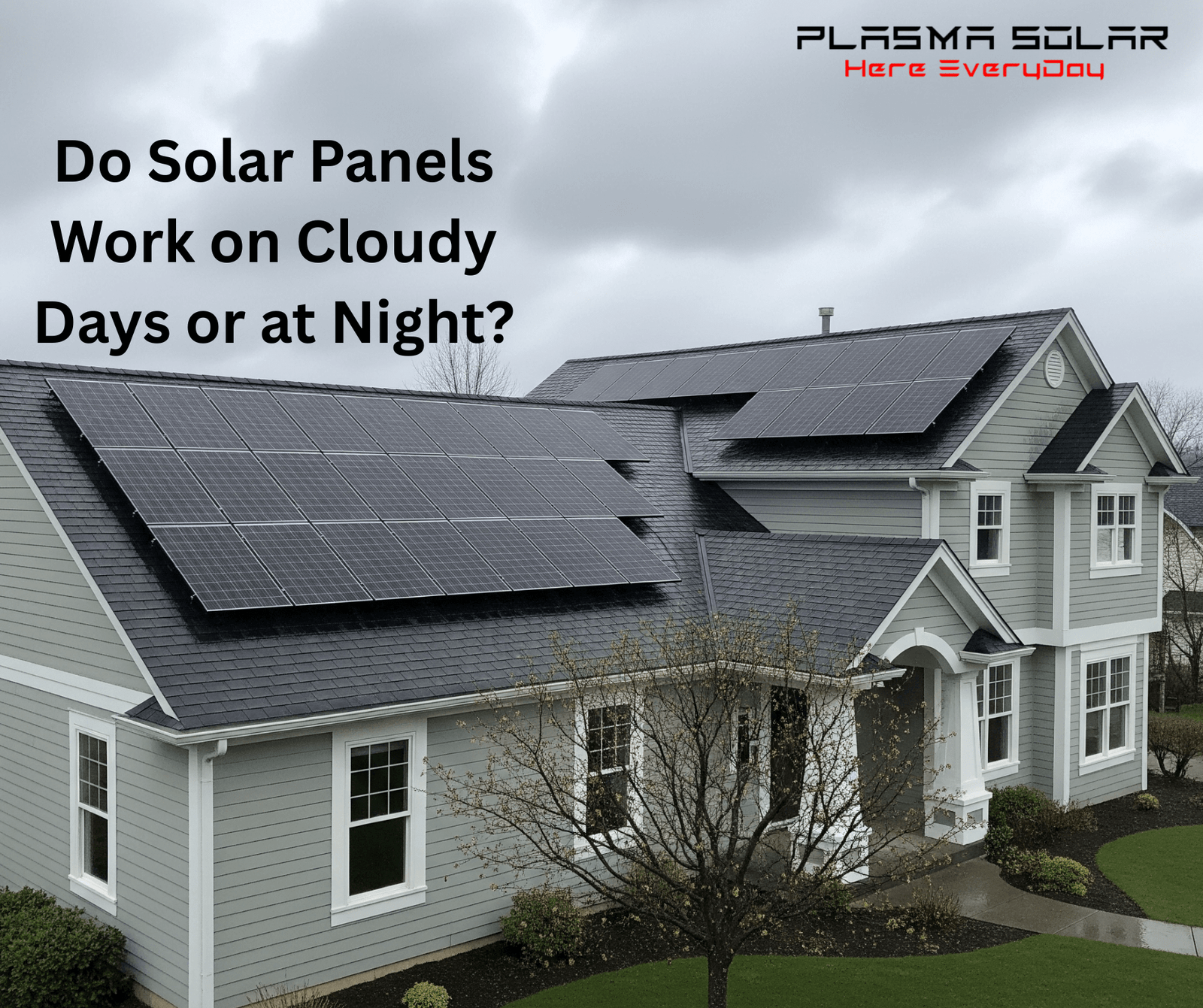

Will Solar Panels Work on Cloudy Days or at Night?
When most people think about solar power, the first question that comes to mind is: “Will solar panels work on cloudy days or at night?” At Plasma Solar Limited, we often receive this question from Kenyan homeowners, businesses, and farmers who want to reduce electricity costs but worry about weather conditions. Let’s clear up the confusion.
✅ Do Solar Panels Work on Cloudy Days?
Yes, solar panels still generate electricity on cloudy days. Solar panels are designed to capture both direct sunlight and diffused sunlight (the sunlight that passes through clouds). While efficiency drops compared to a clear, sunny day, panels can still produce 10–25% of their maximum output depending on cloud density.
For example, cities like Nairobi and Naivasha often experience cloudy mornings, but solar installations there continue to power homes, hotels, and factories. Germany, one of the world leaders in solar energy, gets fewer sunny days than Kenya but still relies heavily on solar power.
🌙 Do Solar Panels Work at Night?
Solar panels do not generate electricity at night because they need sunlight to function. However, this doesn’t mean your home or business will be left in the dark. Here’s how night power is managed:
Solar Battery Storage – During the day, excess electricity is stored in batteries. At night, you can use this stored energy seamlessly.
Hybrid Solar Systems – These combine solar with the national grid (KPLC in Kenya) or generators, ensuring you always have backup power.
Net Metering (Future Option in Kenya) – In some countries, extra power sent to the grid during the day is credited back to your bill for night usage.
🌞 Why Solar Still Makes Sense in Kenya
Kenya enjoys an average of 5–7 peak sun hours per day, making it one of the best regions for solar in Africa.
Even during cloudy or rainy months, solar systems paired with batteries can provide reliable, consistent power.
At Plasma Solar Limited, we design systems that match your exact energy needs, ensuring savings and energy security all year round.
⚡ Final Takeaway
Solar panels work even on cloudy days by capturing diffused sunlight, though with reduced output. At night, they rely on batteries or hybrid solutions to keep power flowing. So, investing in solar in Kenya is not just practical—it’s one of the smartest decisions for lowering bills, increasing energy independence, and protecting against rising electricity costs.
